
System Bets Explained: Your Complete Guide to Trixies, Yankees & More
 Available in US
There’s something deeply frustrating about building the perfect accumulator four solid selections, well-researched, decent odds only to watch it crumble because one team concedes a 94th-minute equalizer. You get nothing. Zero. That’s the accumulator gamble in its purest, most brutal form. All or nothing. One failure and your entire slip is worthless, regardless of how many selections won.
System bets exist to solve exactly this problem, though “solve” might be overstating it. They redistribute your risk across multiple smaller bets rather than concentrating everything into one fragile combination. Instead of needing all four selections to win, you create various combinations of doubles, trebles, and accumulators from those same picks. Some combinations will lose, but others might win, and crucially, you walk away with returns even when not everything goes your way.
If you’ve spent any time on British betting sites, you’ve encountered these terms: Trixie, Patent, Yankee, Lucky 15, Heinz, Super Heinz, Goliath. They sound like racehorses or pub quiz team names, but they’re actually structured bet types with specific combinations of selections. Each has its own risk-reward profile, stake requirements, and optimal use cases. Understanding them transforms you from someone randomly ticking boxes on a betslip to someone making informed structural decisions about bet placement.
System betting isn’t some magical solution that guarantees profits or eliminates the bookmaker’s edge. You’re still making the same predictions on the same events system structure doesn’t improve your ability to pick winners. What it does is change how your predictions are monetized. You’re buying insurance through diversification, paying higher total stakes in exchange for partial win potential. Whether that trade-off makes sense depends entirely on your situation, bankroll, and betting style.
This guide breaks down the most common system bets, explains exactly what you’re buying when you place each one, walks through real calculations so you understand potential returns, and helps you decide which systems suit your approach. By the end, you’ll know whether that Yankee or Lucky 15 is actually giving you value or just costing you more money for marginal safety.
How System Bets Work
Before diving into specific system types, let’s establish the fundamental mechanics because this is where confusion breeds expensive mistakes. A system bet takes multiple selections and automatically generates every possible combination of doubles, trebles, four-folds, and so on, depending on the system type. Each combination is an individual bet with its own stake.
Think of it like this: instead of making one bet, you’re making many bets simultaneously. The system handles the combination mathematics for you you just pick your selections and choose your system type. The bookmaker’s software then calculates all the permutations and shows you the total stake required.
Here’s a simple example using three selections to illustrate the concept. You fancy Arsenal to win at 2.00, Liverpool to win at 1.80, and Manchester City to win at 1.50. You could put these in a treble (one bet requiring all three to win) or you could use a system bet to cover multiple scenarios.
A Trixie system takes those three selections and creates three doubles plus one treble four bets total. Your stake isn’t going on one combined bet anymore. Instead, you’re placing four separate bets: Arsenal and Liverpool double, Arsenal and Manchester City double, Liverpool and Manchester City double, and all three in a treble. If you’re betting one pound per line, your total stake is four pounds.
Now let’s see what happens with different outcomes. Scenario one: all three win. You collect on all four bets three winning doubles and one winning treble. Total returns are substantial because you’re getting paid multiple times. Scenario two: only Arsenal and Liverpool win. You lose the treble and the double involving Manchester City, but you still collect on the Arsenal-Liverpool double. You get something back instead of nothing.
That partial win potential is the core appeal of system betting. You’re not putting all your eggs in one basket. You’re distributing them across multiple baskets so that even when some break, others survive. The cost is your total stake four pounds instead of one in our Trixie example. Whether that three-pound premium is worth the insurance depends on your confidence level and risk tolerance.
The mathematics behind combination betting involves permutations, but you don’t need to be a mathematician to use them. The important thing is understanding what you’re actually betting on when you select a system type. Each system has a set number of combinations, which determines your total stake. A Patent (three selections, seven bets) costs more than a Trixie (three selections, four bets) because it includes singles. More coverage means higher stakes.
One crucial point that trips up beginners: each individual bet within your system is settled independently based on its own combination of selections. The odds for each line are calculated by multiplying the individual odds of the selections in that combination. If you’ve got a double with Arsenal at 2.00 and Liverpool at 1.80, that double pays at 3.60 odds (2.00 times 1.80). Understanding this is essential for calculating potential returns.
System bets work best with selections at medium-to-high odds, typically between 1.50 and 5.00. Bet heavy favorites at 1.20 or 1.30 and the combined odds of your doubles or trebles might not even cover your total stake unless multiple combinations win. Bet wild longshots at 10.00 or 15.00 and you’re paying enormous total stakes for coverage you probably don’t need the high odds mean singles or small accumulators are more efficient.
The strategic advantage of system betting emerges when you’ve identified several strong selections but aren’t certain about all of them. You believe Arsenal and Liverpool will win, and City probably will too, but there’s enough uncertainty that you want protection. System betting lets you back all three with partial insurance. If your confidence level is very high, stick with accumulators. If it’s very low, stick with singles. System bets live in the middle ground of moderate confidence across multiple selections.
The Patent (Three Selections, Seven Bets)
The Patent is typically the first system bet beginners encounter, and for good reason it’s simple enough to understand while offering comprehensive coverage. Take three selections and the Patent creates seven bets: three singles, three doubles, and one treble. Every possible combination is covered, including the singles for maximum protection.
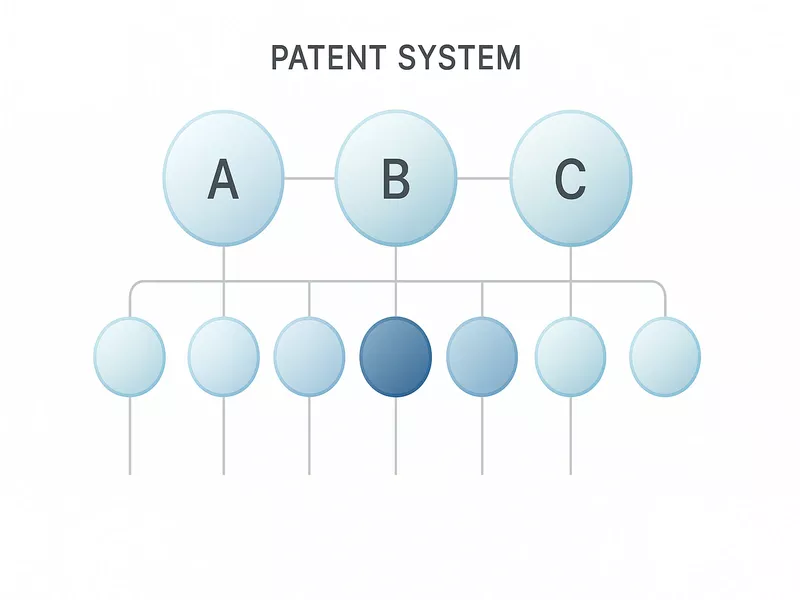
This complete coverage means even if only one of your three selections wins, you get something back from that single. This is the Patent’s signature advantage over a Trixie, which doesn’t include singles and therefore requires at least two winners for any return. The trade-off is cost seven stakes instead of four. If you’re betting two pounds per line, a Patent costs fourteen pounds versus eight for a Trixie.
Let’s work through a detailed example with real odds to show exactly how returns are calculated. You’re backing three Premier League matches: Chelsea to win at 2.20, Tottenham to win at 1.90, and Newcastle to win at 2.50. You place a Patent with a five-pound unit stake, meaning five pounds per line for a total outlay of thirty-five pounds (seven bets times five pounds).
Scenario one: all three win. You collect on all seven bets. Singles: Chelsea single returns eleven pounds (five stake plus five fifty profit), Tottenham single returns nine fifty, Newcastle single returns twelve fifty. Doubles: Chelsea-Tottenham double at 4.18 odds returns twenty pounds ninety, Chelsea-Newcastle double at 5.50 returns twenty-seven fifty, Tottenham-Newcastle double at 4.75 returns twenty-three seventy-five. Treble: all three at 10.45 odds returns fifty-two twenty-five. Add it all up and you’re collecting roughly 167 pounds on a thirty-five pound stake. Net profit 132 pounds.
Scenario two: Chelsea and Tottenham win, Newcastle loses. You lose three bets (the Newcastle single, both doubles involving Newcastle, and the treble). You collect on the Chelsea single (eleven pounds), Tottenham single (nine fifty), and the Chelsea-Tottenham double (twenty pounds ninety). Total returns forty-one forty. You’re up six forty after your thirty-five pound stake. Not huge profit but you’re still ahead despite one loss.
Scenario three: only Chelsea wins. You lose everything except the Chelsea single, which returns eleven pounds. You’re down twenty-four pounds overall (thirty-five stake minus eleven returned). This is the scenario where Patent’s single coverage provides value without those singles, you’d have lost your entire stake.
Scenario four: all three lose. You lose everything, obviously. No system protects you from total failure.
The Patent works exceptionally well in horse racing, where it originated. Racing punters often identify three strong fancies across a day’s card but aren’t certain all three will win maybe one faces a tough draw, another has jockey concerns, the third is returning from injury. The Patent structure captures upside from any combination winning while providing the safety net of singles.
For football or other sports, Patents are ideal when you’ve got three matches you like but varying confidence levels. Maybe you’re very confident about one, moderately confident about another, and the third is more speculative. The singles capture value from your strong pick even if the others fail, while the doubles and treble provide combination upside if multiple hits.
The key decision point is whether those singles are worth betting independently. If all three selections are solid enough to back as individual bets, the Patent makes sense. If one or two selections are only attractive as part of combinations, you’re wasting money on singles that have limited value. In that case, a Trixie (no singles) might be more efficient.
Bankroll-wise, Patents are accessible to most bettors because the stake multiplication isn’t extreme. Even at five pounds per line, you’re looking at thirty-five pounds total significant but not bankrupting for casual weekend betting. Compare this to larger systems and the accessibility advantage becomes clear.
The Trixie (Three Selections, Four Bets)
Strip away the singles from a Patent and you’ve got a Trixie three doubles and one treble from three selections, four bets total. This is the streamlined version of three-selection system betting, offering combination coverage without the singles safety net.
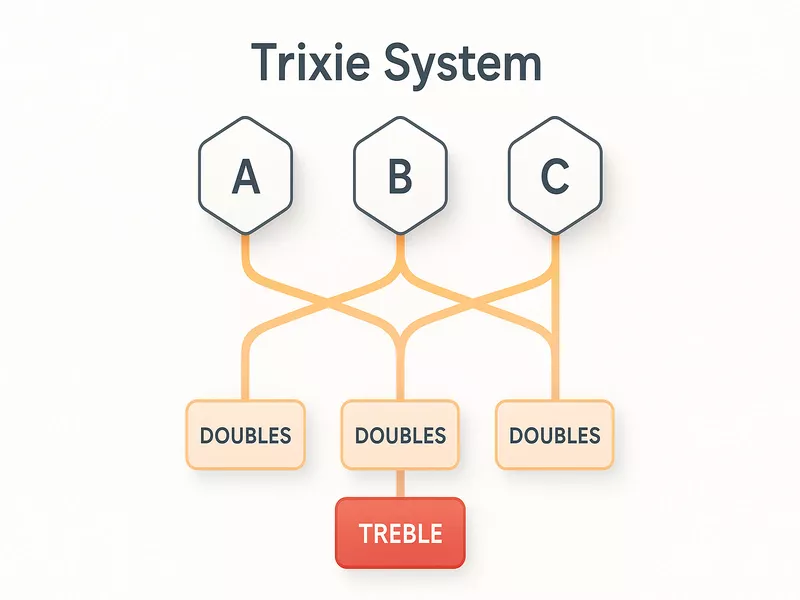
The Trixie’s defining characteristic is that you need at least two winners to see any return. One winner means you lose everything because singles aren’t included. This makes it inherently more aggressive than a Patent. You’re accepting higher risk in exchange for lower total stake. If you’re betting five pounds per line, a Trixie costs twenty pounds versus thirty-five for a Patent. That fifteen-pound difference is what you’re paying for single coverage in a Patent.
Let’s work through an example using tennis matches. You’re backing three ATP players: Djokovic to win at 1.60, Alcaraz to win at 1.75, and Sinner to win at 1.70. You place a Trixie with a ten-pound unit stake, costing forty pounds total (four bets times ten pounds).
Scenario one: all three win. You collect on all four bets. Djokovic-Alcaraz double at 2.80 returns twenty-eight pounds profit. Djokovic-Sinner double at 2.72 returns twenty-seven twenty profit. Alcaraz-Sinner double at 2.975 returns twenty-nine seventy-five profit. Treble at 4.76 returns thirty-seven sixty profit. Total returns approximately 123 pounds. Net profit about 83 pounds on forty pounds staked. Solid return.
Scenario two: Djokovic and Alcaraz win, Sinner loses. You lose the treble and both doubles involving Sinner. You collect only on the Djokovic-Alcaraz double, which returns twenty-eight pounds profit. Add your ten-pound stake back and you’ve got thirty-eight pounds returned. You’re down two pounds overall (forty staked minus thirty-eight returned). Essentially break-even considering variance.
Scenario three: only Djokovic wins, others lose. You lose everything. The Trixie provides no return with just one winner. Your forty pounds is gone. This is where the Trixie’s lack of singles becomes painful a Patent would have at least returned your Djokovic single stake (sixteen pounds) reducing losses.
Scenario four: Djokovic and Sinner win, Alcaraz loses. You collect on the Djokovic-Sinner double (twenty-seven twenty profit), same outcome as scenario two. Nearly break-even despite one loss.
Horse racing punters often use Trixies when they’ve identified three horses at decent odds (3.00 to 6.00 range) that they believe have legitimate chances but aren’t confident enough to back heavily as singles. The doubles provide coverage if any two hit, and the treble offers jackpot potential if all three come through.
For football betting, Trixies work well with slightly risky propositions maybe three away underdogs you think have value, or three overs/unders bets in matches with attacking potential. You wouldn’t necessarily back these as singles because individual risk is too high, but combining them in a Trixie distributes that risk appealingly.
The Trixie-versus-Patent decision often comes down to confidence level and bankroll. If you can afford the extra stakes and want maximum coverage, go Patent. If you’re working with limited funds or your picks are only attractive in combination, go Trixie. There’s no universally correct answer context matters.
The Yankee (Four Selections, Eleven Bets)
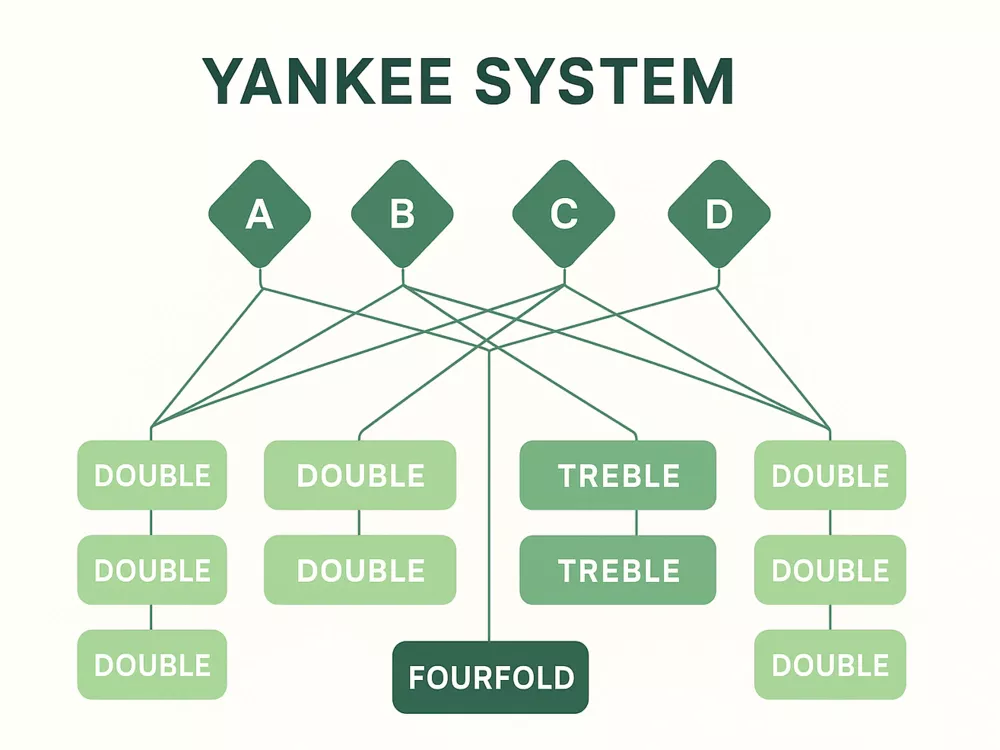
Step up to four selections and things get interesting. A Yankee creates eleven bets from four picks: six doubles, four trebles, and one four-fold accumulator. No singles here, so you need at least two winners to see any return, same as a Trixie. But the additional selection exponentially increases your combination possibilities.
The mathematics behind Yankees is what makes them appealing. With four selections, you’ve got six ways to make doubles (A-B, A-C, A-D, B-C, B-D, C-D), four ways to make trebles (ABC, ABD, ACD, BCD), and one way to combine all four (ABCD). Each combination is a separate bet, each settled independently based on its constituent selections.
Let’s work through a comprehensive example using Saturday football. You’re backing four Premier League matches: Arsenal to win at 1.80, Liverpool to win at 2.00, Manchester City to win at 1.60, and Chelsea to win at 2.20. You place a Yankee with a five-pound unit stake, costing fifty-five pounds total (eleven bets times five pounds).
Scenario one: all four win. You collect on all eleven bets. The six doubles return various amounts based on their combined odds. Arsenal-Liverpool double (3.60 odds) returns eighteen pounds profit. Arsenal-City double (2.88) returns fourteen forty profit. Arsenal-Chelsea double (3.96) returns nineteen eighty profit. Liverpool-City double (3.20) returns sixteen pounds profit. Liverpool-Chelsea double (4.40) returns twenty-two pounds profit. City-Chelsea double (3.52) returns seventeen sixty profit. Total from doubles: about 108 pounds profit.
The four trebles add more: Arsenal-Liverpool-City treble (5.76 odds) returns twenty-eight eighty profit. Arsenal-Liverpool-Chelsea treble (7.92) returns thirty-nine sixty profit. Arsenal-City-Chelsea treble (6.336) returns thirty-one sixty-eight profit. Liverpool-City-Chelsea treble (7.04) returns thirty-five twenty profit. Total from trebles: about 135 pounds profit.
The four-fold accumulator combining all selections at 12.672 odds returns fifty-eight thirty-six profit. Add everything up and you’re collecting roughly 356 pounds on a fifty-five-pound stake. Net profit around 301 pounds. That’s substantial return for moderate odds selections.
Scenario two: three win (Arsenal, Liverpool, City) but Chelsea loses. You lose the four-fold and any combination involving Chelsea (three doubles and three trebles). You collect on three doubles (Arsenal-Liverpool, Arsenal-City, Liverpool-City) and one treble (Arsenal-Liverpool-City). Total returns approximately eighty-six pounds. Net profit about thirty-one pounds despite one loss. You’re still ahead.
Scenario three: two win (Arsenal and Liverpool) but City and Chelsea lose. You lose everything except the Arsenal-Liverpool double, which returns eighteen pounds profit. You’re down significantly (fifty-five stake minus twenty-three returned equals thirty-two pounds loss), but at least you got something back. With an accumulator, you’d have lost everything.
Scenario four: only one wins or all lose. You lose your entire fifty-five-pound stake. Yankees don’t protect against complete failure.
Yankees shine in horse racing where you can identify four strong contenders across multiple races. Racing odds tend to be higher than football, which means your doubles and trebles create more appealing combined odds. A Yankee on four horses at 4.00 to 6.00 odds each produces huge returns when three or four win.
The strategic consideration with Yankees is selection quality. You need at least two winners minimum, which means you better be confident in at least half your picks. If you’re just throwing darts hoping something hits, you’re wasting money. Yankees reward good handicapping across multiple selections, not lucky guesses.
Bankroll requirements step up noticeably with Yankees. At five pounds per line, fifty-five pounds is a serious commitment for casual bettors. You need a bankroll that can absorb that stake comfortably, ideally treating it as one to two percent of total funds. If fifty-five pounds represents ten percent of your bankroll, you’re betting too high.
The Lucky 15 (Four Selections, Fifteen Bets)
Take a Yankee and add singles for each selection and you’ve got a Lucky 15 four singles, six doubles, four trebles, and one four-fold accumulator. Fifteen bets total, hence the name. This is comprehensive coverage on four picks, protecting you even if only one selection wins.
The “Lucky” designation comes from bookmaker bonuses that many operators offer on Lucky 15s. Common promotions include double odds if only one winner, or ten percent bonus on returns if all four selections win. These bonuses make Lucky 15s particularly attractive during major events Cheltenham Festival in racing, Champions League knockout rounds in football, Grand Slam tennis tournaments.
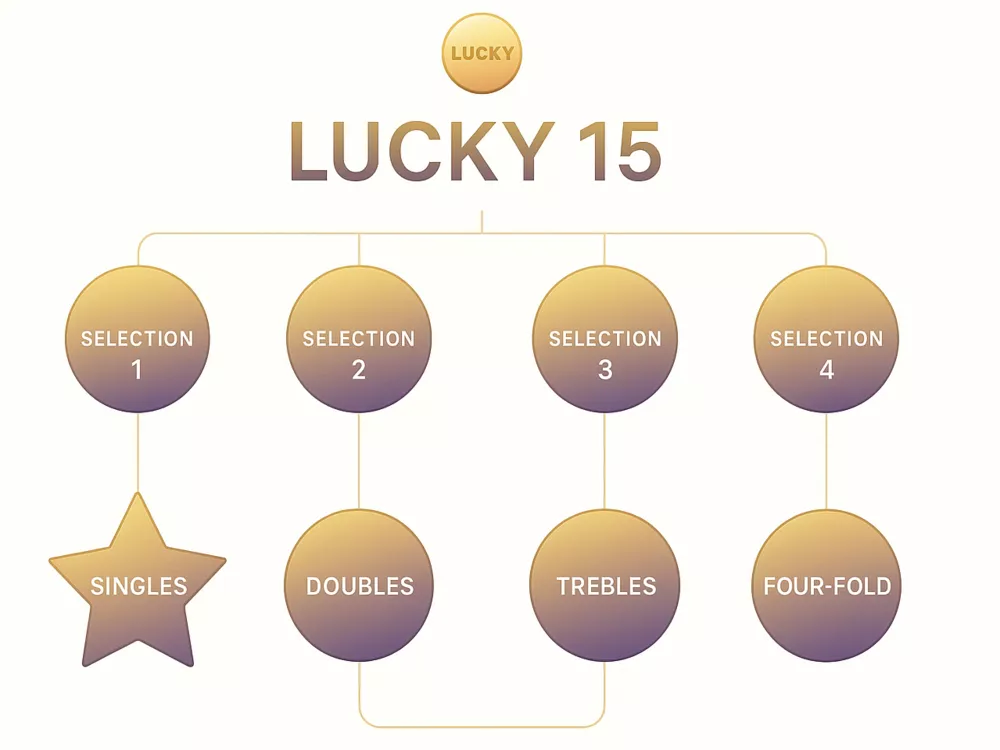
The single coverage is what separates Lucky 15s from Yankees, and it’s not just a marginal difference. Those four singles mean you’re guaranteed some return if at least one selection wins, even if everything else fails. This makes Lucky 15s the most forgiving four-selection system, perfect for bettors who want maximum safety at the cost of maximum stake.
Let’s work through an example using Saturday horse racing. You’ve identified four horses: Red Rum at 3.50, Desert Orchid at 4.00, Kauto Star at 5.00, and Denman at 3.00. You place a Lucky 15 with a ten-pound unit stake, costing 150 pounds total.
Scenario one: all four win. You collect on all fifteen bets plus bookmaker bonuses. Singles return seventy, eighty, ninety, and sixty pounds respectively (profit only, roughly 300 total with stakes). Doubles create substantial returns with combined odds ranging from 10.50 to 20.00. Trebles push into seriously high combined odds. The four-fold at 210.00 combined odds returns absolutely massive payout. With a typical ten percent all-winner bonus, you might collect over 3,500 pounds on 150 staked. These are the scenarios that create Lucky 15 legend status.
Scenario two: three win (Red Rum, Desert Orchid, Kauto Star) but Denman loses. You collect on three singles, three doubles (those not involving Denman), one treble, but lose the four-fold and anything involving Denman. Total returns depend on which three win but figure around 600-800 pounds. Net profit about 450-650 pounds. Still excellent result.
Scenario three: two win (Red Rum and Desert Orchid). You collect on two singles and one double. Returns approximately 210 pounds. Net profit about sixty pounds. Modest but positive despite fifty percent failure rate.
Scenario four: only Red Rum wins. You collect just the Red Rum single returning twenty-five pounds profit. With many bookmakers offering double odds on single winners in Lucky 15s, that becomes fifty pounds profit. You’re still down one hundred pounds overall but the promotion softened the blow significantly.
Promotions genuinely add value to Lucky 15s if you’re using bookmakers that offer them. A ten percent all-winner bonus might seem small but on returns of several thousand pounds, it’s significant. Double odds on single winners is even more impactful because it protects your downside instead of losing 130 pounds when only one wins, you might only lose eighty. That forty-pound difference matters over multiple attempts.
Larger Systems: Heinz, Super Heinz, Goliath
Beyond four selections lie the monster systems bets so large that they require serious bankroll commitment and careful consideration. These aren’t for casual weekend punters. They’re for serious bettors with substantial funds who’ve identified multiple strong selections and want comprehensive coverage.
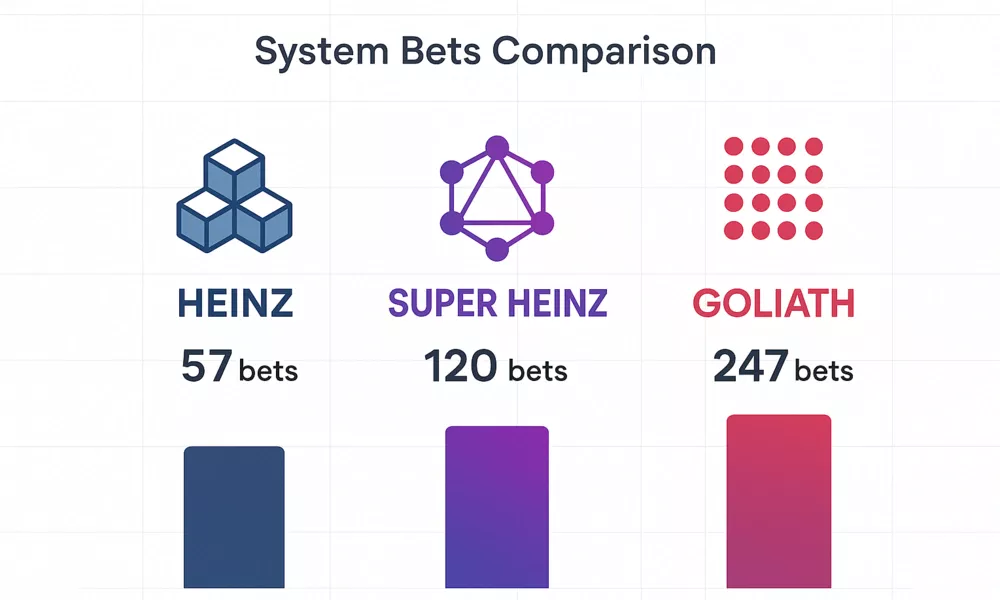
The Heinz covers six selections with fifty-seven bets. That’s fifteen doubles, twenty trebles, fifteen four-folds, six five-folds, and one six-fold accumulator. No singles, so you need minimum two winners for any return. At five pounds per line, a Heinz costs 285 pounds. At ten pounds per line, 570 pounds. This is commitment-level betting.
The challenge with Heinz bets is tracking what you’re actually betting on. Fifty-seven individual bets mean fifty-seven different outcome scenarios to calculate. You’re not going to manually work through all combinations you rely on bookmaker software to handle settlements. This opacity is fine when you trust the math, but it means you need to understand the structure conceptually rather than calculating every permutation.
The Super Heinz adds another selection, taking seven picks and creating 120 bets. You’ve got twenty-one doubles, thirty-five trebles, thirty-five four-folds, twenty-one five-folds, seven six-folds, and one seven-fold. At five pounds per line, that’s 600 pounds total stake. At ten pounds, 1,200 pounds. This is serious money requiring serious bankroll.
Super Heinz bets are almost exclusively used by professional or semi-professional bettors who’ve identified multiple edges across a weekend’s fixtures. Maybe it’s a horse racing punter who’s studied form extensively and found seven horses they believe are underpriced. Maybe it’s a football bettor who’s identified value across multiple leagues. Either way, you’re committing significant funds to coverage that only makes sense if you’re winning more than you’re losing long-term.
The Goliath is the monster eight selections creating 247 bets. That’s twenty-eight doubles, fifty-six trebles, seventy four-folds, fifty-six five-folds, twenty-eight six-folds, eight seven-folds, and one eight-fold accumulator. At just one pound per line, a Goliath costs 247 pounds. At five pounds per line, 1,235 pounds. At ten pounds per line, 2,470 pounds. This is professional-level wagering.
Goliaths are used when someone has supreme confidence across multiple selections and wants to capture every possible combination value. You might see Goliaths on Cheltenham Festival week when a racing bettor has strong opinions on eight races. Or during a World Cup when a football analyst believes they’ve identified value across eight matches. The structure allows you to have two or three losers and still profit substantially if the others hit.
For the overwhelming majority of bettors, stick to Patents, Trixies, Yankees, or Lucky 15s. These provide adequate coverage on three or four selections without requiring bankrolls that exceed most people’s monthly income. The larger systems exist for completeness, but they’re specialty tools for specialty situations.
Calculating System Bet Returns
Understanding how bookmakers calculate your returns on system bets prevents confusion when settlements occur and helps you assess whether a system is worth placing. The mathematics are straightforward once you grasp the underlying principle: each individual bet within your system is settled independently.
Many online bookmakers show potential returns for different scenarios before you confirm your bet. This feature is incredibly valuable it shows you what happens if you get two winners, three winners, or all four. Use these calculators to understand your risk-reward profile. If you need all selections to win just to break even on your stake, you’re probably betting too high or choosing bad odds.
Each-way system bets add complexity but follow the same principle. In racing, each-way means you’re betting on a horse to win and to place (typically top three or four finishers). An each-way Yankee is effectively two Yankees one for wins, one for places costing double the stake. This provides coverage when horses place but don’t win, which happens frequently in competitive fields.
Place odds are typically one-quarter or one-fifth of win odds depending on race size. If a horse is 5.00 to win, its place odds might be 1.75 (one-quarter of win odds plus original stake in decimal terms). Calculate each-way returns by settling the win portion if it wins, and the place portion if it places. Both portions might collect if the horse wins.
Dead heat rules occasionally affect system bets in racing when two horses tie for a position. In dead heats, your stake and returns are divided by the number of horses involved in the tie. If you backed a horse in a two-way dead heat, you get half your stake on at full odds, and the other half returned as stake. This can create confusing settlements in system bets where one selection dead-heats suddenly some combinations pay half returns.
The important practical insight is that you don’t need to manually calculate everything. Bookmaker software handles the math. What you need to understand is the structure how many bets you’re placing, what stake per line means for total cost, and roughly what returns look like under different outcome scenarios. The rest is automation.
See also: betsystemexpert – all betting systems explained.
See also: Flat Betting Strategy – start with the most popular staking method.
